
Most avoidable readmissions trace back to the days just after discharge. Here is what to nail down before you leave the building.
Discharge feels like the end of the ordeal. Clinically, it is one of the riskiest points in the whole episode. Medications have often changed during the stay. Instructions get delivered quickly, to a tired patient, in a corridor. Follow-up appointments get mentioned but not booked. And the physicians who will actually manage things from here — the primary care doctor, the specialists — frequently do not yet know what happened.
Get the medication list reconciled before you leave
This is the single highest-value thing to do. Medications are routinely started, stopped and adjusted during a hospital stay. If nobody reconciles the discharge list against what was being taken at home, patients end up doubling up on drugs that do the same thing, or continuing something that was deliberately stopped.
Ask directly: which of my previous medications am I still taking, which have stopped, and which are new? Get it in writing. Then compare it to the bottles at home rather than to memory.
Find out who is responsible for what happens next
"Follow up with your doctor in two weeks" is not a plan. Which doctor? For what? Who books it — you, or the discharging team? What test results are still outstanding, and who will call about them?
An unanswered version of any of these questions is a plausible route back to the hospital.
Understand the warning signs
Ask what specifically should prompt a call, and to whom. Not "if you feel unwell" — a concrete list. A temperature above what. Swelling where. Which symptom means the emergency department rather than the clinic on Monday.
Make sure the outside team is told
The private physicians, therapists and rehabilitation staff who take over care are often the last to learn what happened in the hospital. Discharge summaries do get sent, but they arrive late, and they are written for other hospital clinicians rather than for the person coordinating care at home.
Part of what a patient advocate does is close that loop deliberately: facilitating communication to the private physicians and other related providers about the events of the hospitalization, so the handoff is not left to paperwork.
Be honest about what home actually looks like
Discharge planning tends to assume a home that may not exist: someone available during the day, no stairs to a bathroom, a person who can collect prescriptions. If that is not your situation, say so before discharge, not after. Evaluating what would make the client's environment safer is far easier to arrange in advance.
Why an advocate helps here
Every item above is doable by a family member. It is also a lot to hold in your head while worried and exhausted, in a system where the person who knows the answer has already moved to the next patient.
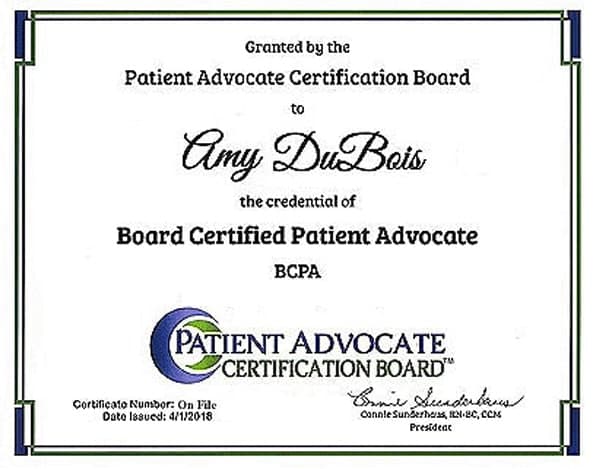
Assisting the post-hospitalization transition to reduce the need for re-hospitalization is one of the core services Amy DuBois, RN, BCPA, provides for families across Tucson and Southern Arizona. If a discharge is coming and you would rather not manage it alone, call 520-909-8203.
- hospital
- discharge
- readmission