
Patient advocacy sounds vague until you see the specific work involved. Here is what an RN patient advocate does during a hospital stay, at appointments, and between them.
"Patient advocate" is one of those job titles that explains almost nothing. People hear it and picture something between a social worker and a complaints department. The actual work is far more concrete than that, and it is easier to understand by looking at what happens in the room.
What an advocate is not
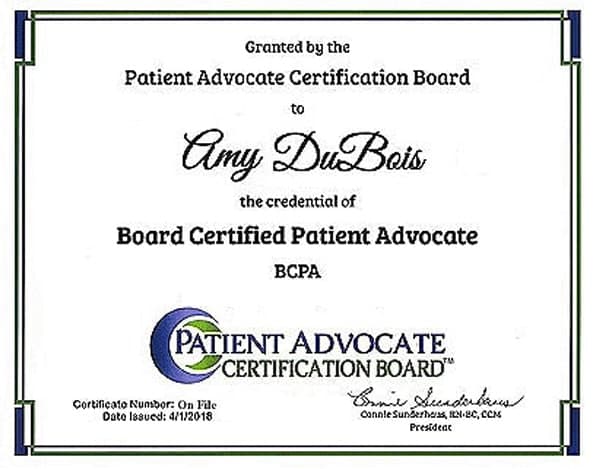
An RN patient advocate does not diagnose, prescribe, or decide. Amy DuBois is a Registered Nurse, but she is not your treating clinician and does not replace one. She also does not overrule your doctors. What she does is make sure you understand what your doctors are telling you, that your questions actually reach them, and that the people treating you are working from the same information.
During a hospital stay
A hospital admission is where the gap shows most clearly. The team making decisions about your care often meets you for the first time that day. They are working from whatever records reached them and whatever the patient or family can recall under stress — which, in an emergency, is rarely complete.
An advocate arrives already knowing the history. Specifically, the work is to:
- Inform the hospital-based medical team of health, medication and treatment histories
- Follow the progress of the hospitalization so the patient and family understand what is happening and why
- Assist the transition afterward, to reduce the likelihood of readmission
- Pass the events of the hospitalization to the private physicians, therapists and rehabilitation staff who pick up care afterward
At appointments
Appointments are short and dense. Most people leave one having absorbed a fraction of what was said, and think of their real question somewhere in the parking lot. An advocate attends with you, makes sure the questions get asked, and confirms the plan is understood before you leave the room — then writes it down.
That written summary matters more than it sounds. It is what lets an adult child in another state understand what actually happened, rather than being told "it went fine."
Between appointments
Most of the quiet damage in healthcare happens in the gaps. A cardiologist changes a medication; the primary care physician does not hear about it for three months. Records sit in one system and never reach another. A follow-up test gets ordered and never booked.
Ongoing advocacy work is unglamorous and useful: obtaining previous medical records and building one medical summary every physician on the case can use, reviewing medications for potential interactions across all prescribers, coordinating follow-up tests and appointments, and facilitating communication so each member of the team has current information.
Independent means independent
Hospitals employ patient representatives, and many are genuinely helpful. But they are employed by the hospital. An independent advocate is hired by you and answers only to you. Most of the time those interests align and the distinction is academic. When they do not, it is the whole point.
When to call
Families often wait for a crisis. Planning before one is easier, cheaper and considerably less frightening. If you are managing several specialists, caring for a parent from a distance, or leaving appointments unsure what was said, that is already the right time.
RN Patient Advocate of Tucson serves Tucson, Oro Valley, Marana, Sahuarita, Green Valley and Tubac. Call 520-909-8203 — the first consultation is free.
- patient advocacy
- Tucson
- getting started